
Smile!
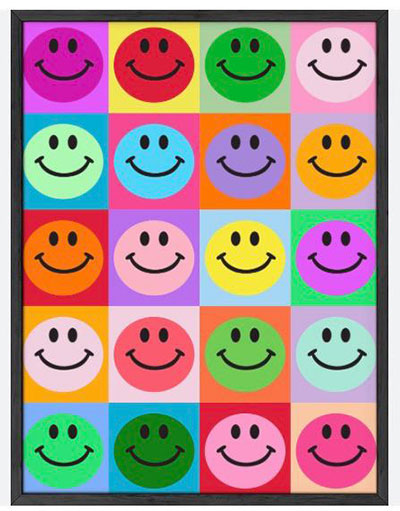 Happy Facts About Smiling:
• Smiling is the universal expression of happiness.
• Handshakes, hugs, and bows all mean different things to different people, but smiling spans across all cultures.
• It takes 62 muscles to frown, but only 26 muscles to smile!
• Smiling is a baby’s first facial expression. Babies are born with the ability to smile and begin smiling in their sleep almost immediately, with social smiling starting at 4-6 weeks.
• Children smile an average of 400 times a day.
• The average woman smiles 62 time a day; the average man only 8 times.
• Researchers have identified 19 different types of smiles, ranging from polite social smiles to genuine, heartfelt ones.
• Surveys indicate that 50% of people say that someone’s smile is the first thing they notice.
• A genuine smile is recognizable from 300 feet away, making it the most easily recognizable facial expression.
• It is scientifically proven that people are attracted to those who smile and are pushed away by those who frown or scowl.
• A study conducted by Orbit found that 69% of people preferred a smiling face not wearing makeup to a non-smiling, makeup-wearing face.
• A genuine smile is contagious because it triggers a psychological reaction that makes others feel good, often causing them to smile back.
• A smile makes you look friendlier, more confident, more trustworthy, and even more competent at work.
• Smiling helps you relax and boosts your immune system.
• Smiling releases endorphins and relieves stress.
• Smiling lowers blood pressure.
• Smiling is a sometimes referred to as a natural pain killer!
• On average, people who smile more live more than 7 years longer than those who do not. They also tend to experience better health throughout that time as well.
• You can trick yourself into being in a better mood simply by smiling. Try it!

Speaking of Smiling:
• “A smile is the shortest distance between two people.” —Victor Borge
• “A warm smile is the universal language of kindness.” —William Arthur Ward
• “Everyone smiles in the same language.” —George Carlin
• “A smile is the universal welcome.” —Max Eastman
• “A smile is a friend maker.” —Bangambiki Habyarimana
• “We shall never know all the good that a simple smile can do.” —Mother Teresa
• “A smile is the best makeup a girl can wear.” —Marilyn Monroe
• “A smile cures the wounding of a frown.” —William Shakespeare
• “Just because a person smiles all the time doesn’t mean that their life is perfect. That smile is a symbol of hope and strength.”
—Shinoj Alex
• “Sometimes your joy is the source of your smile, but sometimes your smile can be the source of your joy.” —Thich Nhat Hanh
• “A cheerful look brings joy to the heart….” —Proverbs 15:30a NIV
• “The power of a smile is such that even drawing a happy face on a piece of paper makes your brain release endorphins, the feel-good hormones.”—Preeti Shendy
• “Always keep your smile. That’s how I explain my long life.” —Jeanne Calment (This French woman was the oldest verified person in modern history, holding the Guinness World Record with an age of 122 years and 164 days.)
• “If you see someone without a smile today, give ‘em yours.” —Dolly Parton

Please encourage your friends and family to subscribe at: justaboutanything.life
Please encourage Mona at: encouragemona@gmail.com
I included a pdf download link below, which will print out nicely for all of my paper-loving readers.
Please feel free to share it with your family and friends.
Download a pdf version of this newsletter